
Pizza Rules
Pizza vera Napoletana
“Vera Pizza Napoletana” is made from a base of risen dough and cooked in a wood fire oven. The product is characterised by ingredients, means and technologies of production.
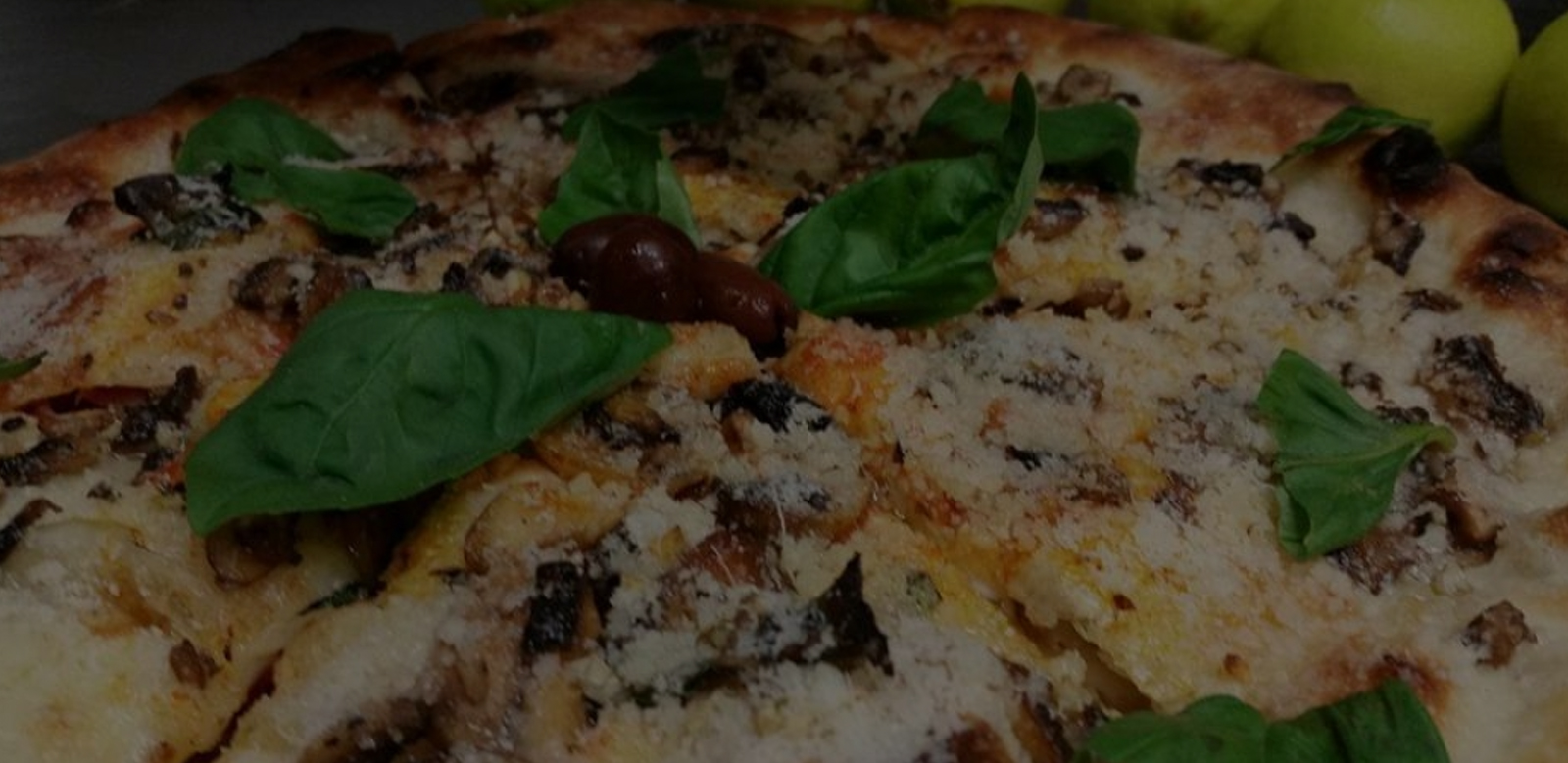
The consistency of the Vera Pizza Napoletana should be soft, elastic, easy to manipulate and fold. The centre should be particularly soft to the touch and taste, where the red of the tomato is evident, and to which the oil or for the Pizza Marinara, the green of the oregano and the white of the garlic has perfectly amalgamated; In the case of the Pizza Margherita, the white of the mozzarella should appear in evenly spread patches, with the green of the basil leaves, slightly darkened by the cooking process.
The crust should deliver the flavour of well-prepared, baked bread. This mixed with the slightly acidic flavour of the densely enriched tomatoes, and the respective aroma of oregano and garlic or basil and the cooked mozzarella ensures that the pizza, as it emerges from the oven, delivers its characteristic aroma, perfumed and fragrant.
The Pizza Base
The products that provide the base for Vera Pizza Napoletana include:
- Wheat flour type “00”: highly refined flour which has been milled to standard “00” (doppio zero). The flour has an almost talcum-powder like appearance, white, fine and is completely free of bran or germ.
- Water: must be clean and free of gas. It must also be free micro organisms, parasites or chemical substances that represent a health risk. Water must be fit for human consumption with a pH = 6-7, the recommended temperature for production is 20 to 22°C and moderately hard with 60 – 80 mg/L as calcium
- Salt: sea salt must be used
- Yeast: Compressed organic yeast, solid, soft and beige in colour ,with quite an insipid taste and a low degree of acidity must be used. Yeast must be purchased in packages ranging from 25-500 grams. (Saccharomices cerevisiae) The use of Natural yeast is also permitted (see appendices).
All types of fat must be excluded from the dough.
The preparation of Vera Pizza Napoletana exclusively follows the below method of production used in a continuous cycle.
Blend flour, water, salt and yeast. Pour a litre of water into a mixer, dissolve between the 50 and the 55g of salt, add 10% of the total amount of flour, and then add 3g of yeast. Start the mixer, and then gradually add 1800 g of flour (w220-380) until of the desired dough consistency is achieved. Combining the ingredients should take 10 minutes.
Mix the dough at low speed for 20 minutes, until the dough forms a single ball. To obtain the optimal dough consistency, it is very important to control the quantity of water, so that the flour is able to absorb it all. The mixture should be sticky, soft and elastic to touch.
First phase of fermentation: remove the dough from the mixer, and place it on a surface in the pizzeria where it can be left to rest for 2 hours, covered by a damp cloth. In this manner the dough’s surface cannot harden, nor can it form a crust caused by the evaporation of the moisture released from the dough. The dough is left, intact, to rise for 2 hours.
With the aid of a spatula, the mixture is cut into strips from which pieces are broken off and then shaped into balls. The formation of the balls must be done exclusively by hand. This technique, known as ‘staglio a mano’ whereby the dough is made into small balls, ‘panetti’, is reminiscent of the technique used in the preparation of mozzarella – ‘mozzatura’ also done by hand. For Vera Pizza Napoletana, the dough balls (‘panetti’) must weigh between 180 and 250 g.
Second phase of fermentation : Once the individual dough balls (‘panetti’) are formed, they are left in ‘rising boxes’ known as “mattarelle” for the second rising stage, which lasts between 4 to 6 hours. By controlling storage temperature (keeping at room temperature), these dough balls can then be used at any time for the following 6 hours.
Following the second rising, the dough ball‘ panetti’ can be removed from the rising box using a spatula and placed on the preparation bench in the pizzeria on a light layer of flour to keep the dough from sticking to the work area. With a motion from the centre outwards, and with the pressure of the fingers of both hands on the dough ball, the base is turned over and around many times. In doing this the ‘‘pizzaiolo” (pizza maker)’ forms a disk of dough (disco di pasta). From the centre the thickness is no more than 0.4 cm (variance ±10% tolerated), and the border that is no greater than 1-2 cm, forming a frame or crust. The crust known as ‘cornicione’ is one of the identifying features of the product.
The base must be prepared by hand. The ‘‘pizzaiolo’s’ (pizza maker’s)’ skill enables him or her to determine the movement of air in the base ensuring it moves from the centre towards the periphery, thus forming the frame or crust known as ‘cornicione’
The CONDIMENTS
Fresh tomatoes: the following variations of fresh tomatoes can be used: “S.Marzano dell’Agro Sarnese-nocerino D.O.P”., “Pomodorini di Corbara (Corbarino)”, “Pomodorino del piennolo del Vesuvio” D.O.P.”
Canned Peeled tomatoes: the recommended tomato is the “pomodoro pelato S.Marzano dell’Agro Sarnese-Nocerino D.O.P.”. If peeled tomatoes are used they should be strained, broken up and homogenised by hand.
All peeled tomatoes that are genetically modified or altered to increase desired traits, resistance to herbicides or increased crop render are not accepted.
Mozzarella: Certified mozzarella di bufala campana D.O.P, mozzarella S.T.G.
Fior di latte – “Fior di latte dell’appennino meridionale D.O.P” or other certified ‘fiordilatte’ .
Oil – The choice of oil used must be made carefully to ensure the oil is resistant to high temperatures.
Cold pressed olive oil that has not been refined, that is, extra-virgin or virgin olive oil, contains natural, biological antioxidants such as toceferol (Vitamin E). It has been found that olive oil, in particular extra-virgin olive oil, remains unaltered when used and has demonstrated an absence of defects.
Origano – “Origanum vulgare” from the “Labiatae” family.
Basil – Fresh Basil must be used.
Cheese – Grated Hard cheese must be used
“Pizza Marinara”
Using a spoon place the pressed, peeled tomatoes in to the centre of the pizza base, then using a spiralling motion, cover the entire surface of the base with the sauce excluding the crust (the addition or substitution of peeled tomatoes with fresh tomatoes is allowed).
Remove any hard or dry sections of the clove of garlic and slice finely. Scatter the slices using the same circular motion over the tomato.
“Pizza Margherita”
Using a spoon place the pressed, peeled tomatoes in to the centre of the pizza base, then using a spiralling motion, cover the entire surface of the base with the sauce excluding the crust (the addition or substitution of peeled tomatoes with fresh tomatoes is allowed).
Add salt uniformly (if it has not previously been added to the tomato) to the tomato sauce.
Spread thinly sliced strips of ‘mozzarella’ or ‘fior di latte’ evenly over the pizza base. Grated cheese, if added, should also be spread in a uniform manner over the base.
A few basil leaves should then be placed on top of this, from the centre outwards.
Starting from the centre and moving out, pour Extra Virgin Olive Oil/Olive oil over the pizza.
Wood-fire COOKING
Vera Pizza Napoletana must be cooked on the stone surface of the pizza oven and not in dishes/pizza pans.
Using a wood (or aluminium) pizza peel, and a little flour, the ‘pizzaiolo’ transfers the garnished pizza using a rotary movement. The pizza slides rapidly with a quick wrist movement performed by the ‘pizzaiolo’ on to the cooking surface of the oven without allowing the condiment to move.
The cooking of the Vera Pizza Napoletana must be done exclusively in a wood fire oven which has reached the cooking temperature of 485° C, (905F). This is essential to cook the pizza.
The pizzaiolo must use wood that does not hold any moisture, smoke or produce odours that alter the aroma of the pizza. Use wood such as Oak, Ash, Beech and Maple.
The ‘‘pizzaiolo’ should monitor the cooking by gently raising the edges of the pizza using a metal pizza peel. The pizza should be slightly rotated, changing the side that is directly facing the fire, taking care to ensure the pizza stays in the same area of the cooking surface and to ensure that the pizza does not burn due to exposure to a different temperature. It is important that the pizza is cooked in uniform manner across its entire circumference.
At the conclusion of the cooking, the ‘pizzaiolo’ removes the pizza from the oven with a metal pizza peel, and places it on a flat, dry work surface. Cooking time should not exceed 60-90 seconds.
After the cooking, the pizza should have the following characteristics:
The tomato should have lost all excess water, and should be dense and consistent;
The mozzarella di Bufala DOP or the mozzarella STG should have melted on the surface of the pizza;
The basil, garlic and the oregano will develop an intense aroma, and will appear brown, but not burned.
The consistency of the Vera Pizza Napoletana should be soft, elastic, easy to manipulate and fold. The crust should deliver the flavour of well- prepared, baked bread. This mixed with the slightly acidic flavour of the densely enriched tomatoes, and the respective aroma of oregano and garlic or basil and the cooked mozzarella ensures that the pizza, as it emerges from the oven, delivers its characteristic aroma, perfumed and fragrant.
The Vera Pizza Napoletana should be consumed immediately, straight out of the oven, at the pizzeria. The product cannot be frozen or cryavacked for delayed sale.
OUR RESTAURANTS LOCATIONS
One Restaurant is in Gladesville at 375 Victoria Road nsw 2111
One Restaurant is in Parramatta at 44 O’Connell Street nsw 2150